AIS 140 GPS Tracker in West Bengal: VLTD Fitment and Tagging
West Bengal switched on its AIS-140 Vehicle Location Tracking System from 1 December 2022 and, unusually, published a written Standard Operating Procedure for VLTD fitment and tagging rather than a one-line notification. This page covers what that SOP actually asks of Bengal operators: OTP-based tagging, panic button placement, MVI inspection and the Kolkata command centre behind it.
West Bengal's own VLTD SOP, and who runs the backend
West Bengal brought its AIS-140 Vehicle Location Tracking System into effect from 1 December 2022, and the Transport Directorate followed it with a written Standard Operating Procedure for VLTD Fitment & Tagging (Memo No. 466-T, dated 8 December 2022). That document, not a vendor's sales sheet, is what your fitment centre, your MVI and your device supplier are all working from in this state.
The state backend is not a private platform either. The Transport Department engaged C-DAC — the Government of India agency under MeitY — for implementation, and panic alerts terminate at a control and command centre in central Kolkata that has been running since 2023.
The Bengal tagging sequence, in order
- The device model must hold a Type Approval Certificate from an authorised testing agency, and the manufacturer uploads those details to VAHAN.
- The dealer or fitment centre logs in with its own credentials and tags the device to the vehicle using the device UIN and IMEI.
- An OTP goes to the permit holder, and the manufacturer or dealer updates that OTP to complete tagging. In practice this means the mobile number sitting on the RC and permit must be live and with the actual owner — not an old number, and not the agent's phone.
- The State Monitoring Centre establishes connectivity and confirms data is arriving on the AIS-140 communication protocol.
- An MVI or AMVI physically inspects the fitment and verifies the vehicle's position on the department's mobile app before certifying it as functional.
- Activation and health status are written back into VAHAN and the state registration backend.
If the portal side of this is new to you, our VAHAN VLTD registration walkthrough covers the screens. For the underlying standard itself, see AIS-140 rules explained instead of re-reading the basics here.
Panic buttons, and what the Kolkata monitoring centre tests
Bengal's SOP does not simply say "fit an emergency button". It sets a placement standard: every passenger, including the driver, must be able to reach one. For passenger buses it asks for buttons at locations easily visible and accessible to all passengers — spaced along the saloon, reported as roughly every two metres on both sides — and points to the vertical pillar above the window rail, below the luggage rack, as the sensible mounting position.
This is the single most common reason a fitment gets sent back in this state. One button beside the driver may be acceptable in a taxi; it will not clear inspection on a 40-seat stage carriage running a Kolkata route.
Checks the State Monitoring Centre runs before activation
- Live connectivity, with packets arriving in the AIS-140 protocol.
- Panic button functionality tested end to end — before activation is granted, not after.
- Device health status as reported by the VLTD itself.
- SIM and subscription validity, confirmed with the M2M or telecom provider. The SOP ties the minimum validity to the vehicle, with a longer window at new fitment and a shorter one for older retrofits. Published figures vary between versions of the document, so confirm the number that applies to your vehicle with your RTO before you pay for a plan.
There is a consequence operators routinely miss. If the VLTD subscription lapses and is not recharged, the panic button stops reaching the Kolkata command centre. The button is still bolted to the pillar and the passenger still presses it, but nobody is listening. The Transport Department reiterated in 2025 that commercial vehicle owners must keep tracking devices active and panic buttons in working order, and a functioning VLTD is looked for at the fitness test. Treat the annual renewal as part of your fitness paperwork, not an optional extra. See our panic button device page for the hardware side.
Phase-wise manufacturer enlistment in West Bengal
West Bengal registers VLTD manufacturers in phases rather than issuing one fixed list. The Transport Directorate opened the process under Notice No. 326/VLTD/T.Dte/2022 dated 12 September 2022, published the first enlisted names on 30 November 2022, issued a third-phase notice in March 2023, and has refreshed the list since — including versions dated February 2024 and 19 March 2024. The department explicitly calls enlistment a continuing process, which means the list somebody showed you last year is not the list today.
Two conditions that decide your supplier
- Every device model must be certified under CMVR and MoRTH guidelines, backed by a valid Type Approval Certificate and CoP.
- The manufacturer must have its own or an authorised state-level service and support centre registered in West Bengal, providing round-the-clock support to vehicle owners. A Bengal address is a stated condition here, not a courtesy.
Before money changes hands, ask any vendor for three things: the enlistment status of that exact model in West Bengal, the TAC number for it, and the working address of the Bengal service centre they are claiming. Then check the current list on the Transport Directorate site yourself.
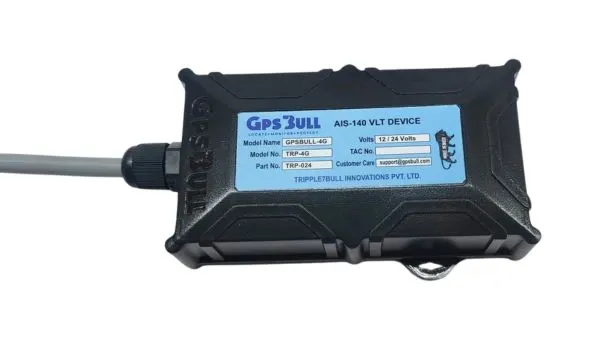
On our side: the GPSBULL AIS-140-4G, model TRP-4G, is AIS-140 certified and carries ARAI type approval TAC AS9026. GPSBULL is a brand of Tripple7Bull Innovations Pvt. Ltd., manufacturing in New Delhi under ISO 9001:2015 and CMMI Level 3 certified processes, with 500,000+ devices deployed across 7+ countries and pan-India shipping to dealers and fitment centres. Pricing is quoted per fleet and per configuration, so ask us for a quote rather than working off any rate you see listed online.
Kolkata, Haldia, Siliguri: where VLTD bites in Bengal
Kolkata and Howrah
The densest concentration of affected vehicles in the state: stage carriage buses, the yellow taxi and app-cab fleet, autos and contract carriages. It is also where alerts land, so a device that goes quiet in the tall-building canyons around Esplanade and Central Avenue gets noticed fast. Our Delhi fitment page shows how we support metro fleets; Bengal operators are handled the same way from the same plant.
School buses and pool cars
Kolkata's school transport advisory goes well beyond the VLTD rule on its own: location tracker, panic button and speed limiting device together, a 40 kmph ceiling, mustard yellow bodywork with a navy blue band, 'SCHOOL BUS' lettering front, rear and sides, seat belts on every seat, grilled bag racks, and school, police control room and Childline numbers displayed inside and outside. If you run school transport here, pair the tracker with a speed limiting device and work through our school bus tracking setup and fitment checklist.
Haldia and the Kharagpur corridor
Port-linked trucking on NH-16 runs long hauls that leave the state and come back, feeding Bihar, Jharkhand and Odisha. Devices here have to hold position through the whole trip and reconnect cleanly on return, which is a different test from a city loop. See logistics tracking.
Siliguri and north Bengal
Siliguri runs on the four Ts — tea, transport, timber and tourism — and is the road gateway to the North East, Nepal, Bhutan and Bangladesh. Tourist contract carriages climbing to Darjeeling and working the Dooars circuits pass through genuine coverage gaps, which is exactly why a single-network SIM is a poor bet in the hills. The TRP-4G uses a dual-network embedded SIM (eSIM) and GPS + GLONASS + IRNSS (NavIC), in an IP68 housing for 12/24 V vehicles — sensible for hill routes and Bengal's monsoon alike. Still running a 2G unit? Read the 2G shutdown upgrade guide.
Asansol-Durgapur
The industrial and coal belt, where tipper and goods fleets sit alongside the notified passenger categories, and where fleet management and driver behaviour monitoring usually matter as much as the compliance certificate.
Cities and districts we supply in West Bengal
Kolkata · Howrah · Siliguri · Asansol · Durgapur · Haldia · Kharagpur · Barasat · Bardhaman · Malda — and the rest of West Bengal. Devices ship from our New Delhi plant; dealers, fitment centres and fleet operators are supported directly, with 24/7 device support after installation.
Frequently asked questions — West Bengal
Is an AIS-140 VLTD mandatory in West Bengal?
West Bengal brought its AIS-140 Vehicle Location Tracking System into effect from 1 December 2022, applying to public service vehicles and national permit vehicles as notified by the department. CMVR Rule 125H requires a VLTD and emergency button on notified public service vehicles nationally, but the exact categories, exemptions and timelines are set by the state. Confirm what applies to your specific vehicle and permit type with your RTO before you fit anything.
Where do panic buttons have to be placed in a West Bengal bus?
The Transport Directorate SOP requires that every passenger, including the driver, can reach an emergency button. For passenger buses it asks for buttons at locations easily visible and accessible to all passengers, spaced along the saloon on both sides, with the vertical pillar above the window rail and below the luggage rack indicated as the preferred mounting point. A single button near the driver is the most common reason a bus fitment fails inspection in this state.
How does the OTP-based tagging work in West Bengal?
The dealer or fitment centre tags the device to the vehicle using the device UIN and IMEI, and an OTP is sent to the permit holder, which the manufacturer or dealer then updates to complete tagging. This means the mobile number recorded on your RC and permit must be current and in your own hands. After that, the State Monitoring Centre checks connectivity, SIM validity, panic button function and device health, and an MVI or AMVI physically inspects the fitment and verifies the vehicle's location on the department's mobile app.
Do I have to buy from a manufacturer enlisted in West Bengal?
West Bengal publishes phase-wise lists of enlisted VLTD manufacturers and expects vehicle owners to buy from them. The state's stated conditions include CMVR and MoRTH certification with a valid Type Approval Certificate for the model, and the manufacturer having its own or an authorised state-level service and support centre registered in West Bengal with round-the-clock support. Because enlistment is a continuing process, always check the latest list on the Transport Directorate website rather than trusting an old screenshot.
What happens if my VLTD subscription lapses?
If the device subscription is not renewed, the VLTD stops sending data and the panic button no longer reaches the Kolkata command centre, even though the button is still physically in the vehicle. The Transport Department reminded commercial vehicle owners in 2025 to keep tracking devices active and panic buttons functional, and a working VLTD is looked for at the fitness test. Treat renewal as part of your fitness and permit paperwork cycle.
Do Kolkata school buses and pool cars need more than a tracker?
Kolkata's school transport advisory asks for a location tracking device, a panic button and a speed limiting device together, with a 40 kmph maximum speed, mustard yellow bodywork with a navy blue band, 'SCHOOL BUS' lettering on the front, rear and sides, seat belts, grilled bag racks, and school, police control room and Childline numbers displayed prominently inside and outside. Check the current advisory text with your RTO, as school transport instructions are updated from time to time.
Fitting AIS-140 devices in West Bengal? Talk to the manufacturer.
Speak directly with the manufacturer — device specifications, state-wise compliance guidance, dealer pricing and bulk quotes. Office: Monday–Saturday, 10 AM–7 PM IST. Device support: 24/7.
Official sources
- West Bengal SOP for VLTD Fitment & Tagging (Transport Directorate)
- Empanelled VLTD manufacturers in West Bengal (Transport Directorate)
- Vahan portal (MoRTH)
Rules, deadlines and empanelment lists are set by the state transport department and change over time — confirm the current position for your vehicle category with your RTO before purchase.